What this post covers
- Why generic advocacy program names undermine participation before the program even launches
- The listening process we used to build a program identity customers actually wanted to claim
- How framing a program around customer identity instead of vendor benefit changes participation rates
- What happened when we built content around the humans in the program, not just polished case studies
- Why the best advocacy programs create value first and let advocacy follow
One of my favorite customer advocacy lessons came from something surprisingly small: the name of the program.
Early on, I noticed a pattern across B2B companies. Everyone seemed to default to the same formula: "Brand Name Advocates." "Customer Champions." "VIP Advocates." And while technically correct, most of them felt incredibly transactional. The language subtly framed the relationship around what the customer could do for the company, instead of what the program could become for the customer.
Customers are smart. They feel that immediately.
The Problem With "Advocate Program" as an Identity
When we started building our branded advocacy program, I became borderline obsessive about getting the identity right. Not just the visuals or messaging, but the emotional reaction customers would have when they heard the name out loud for the first time.
- Would they feel proud saying it publicly?
- Would it sound credible on LinkedIn?
- Would it feel connected to their industry and the work they actually do every day?
- Would top practitioners, executives, and innovators genuinely want to belong to it?
Generic names don't clear those bars. "Advocates" describes what someone does for you. "Champions" implies fighting on your behalf. Neither is something a customer would put in a LinkedIn bio or mention at an industry event.
If a customer wouldn't mention the program name in a LinkedIn bio, the name is working against you.
How We Built a Program Identity Worth Claiming
Start with listening, not brainstorming
That process ended up involving far more listening than brainstorming. I spent time with customers, C-suite leaders, Sales, Customer Success, and community members trying to understand how people saw themselves professionally and how they wanted to be seen. We looked for terminology that felt aspirational without sounding overly corporate or manufactured.
Because the reality is, the strongest advocacy programs are identity ecosystems. They create belonging, status, and visibility for the people inside them.
4 questions we used to pressure-test every name candidate
- Would a customer feel proud saying this name out loud in a professional setting?
- Does it sound credible on a LinkedIn profile or in an event bio?
- Does it connect to how customers see themselves in their industry — not just in relation to us?
- Would senior practitioners and executives want to belong to something with this name?
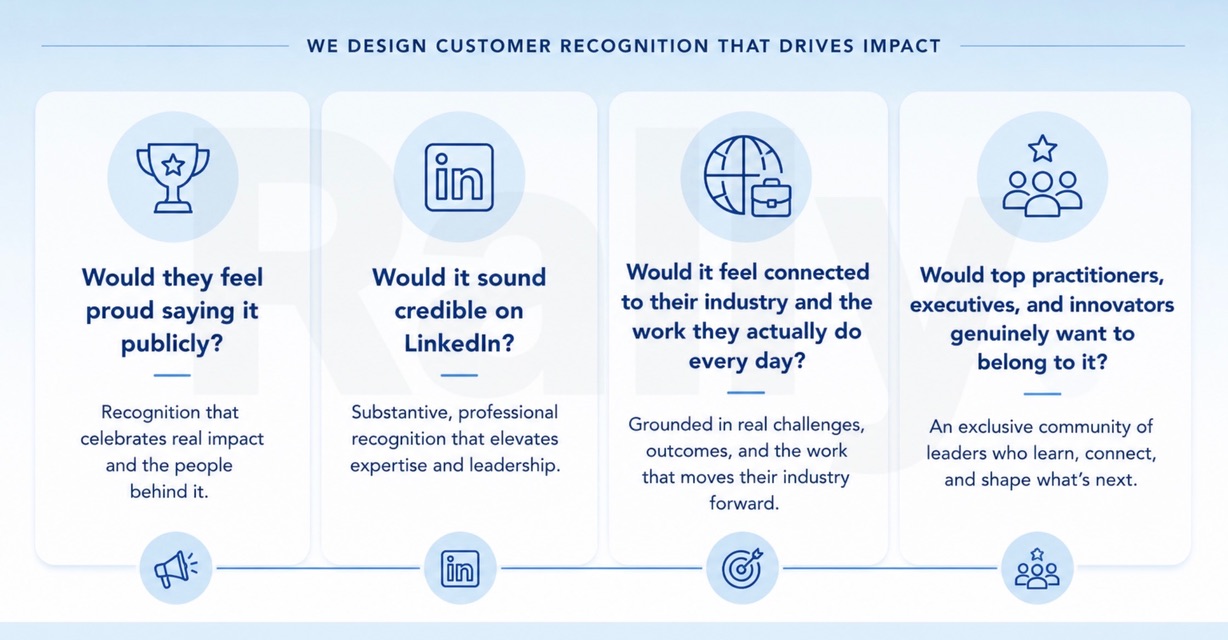
A name that clears all four has a fundamentally different energy than one that clears only the first. The goal was a program identity that a VP-level customer would mention in a board presentation — not just something they'd tolerate being tagged in on social media.
What Changed When the Identity Was Right
Once we shifted our thinking that way, the entire program changed. Participation stopped feeling like a vendor request and started feeling like professional recognition. Customers wanted to join because the program elevated their personal brand, connected them with peers, and positioned them as thought leaders in their space. The advocacy became a byproduct of the experience, not the ask itself.
1. The content changed
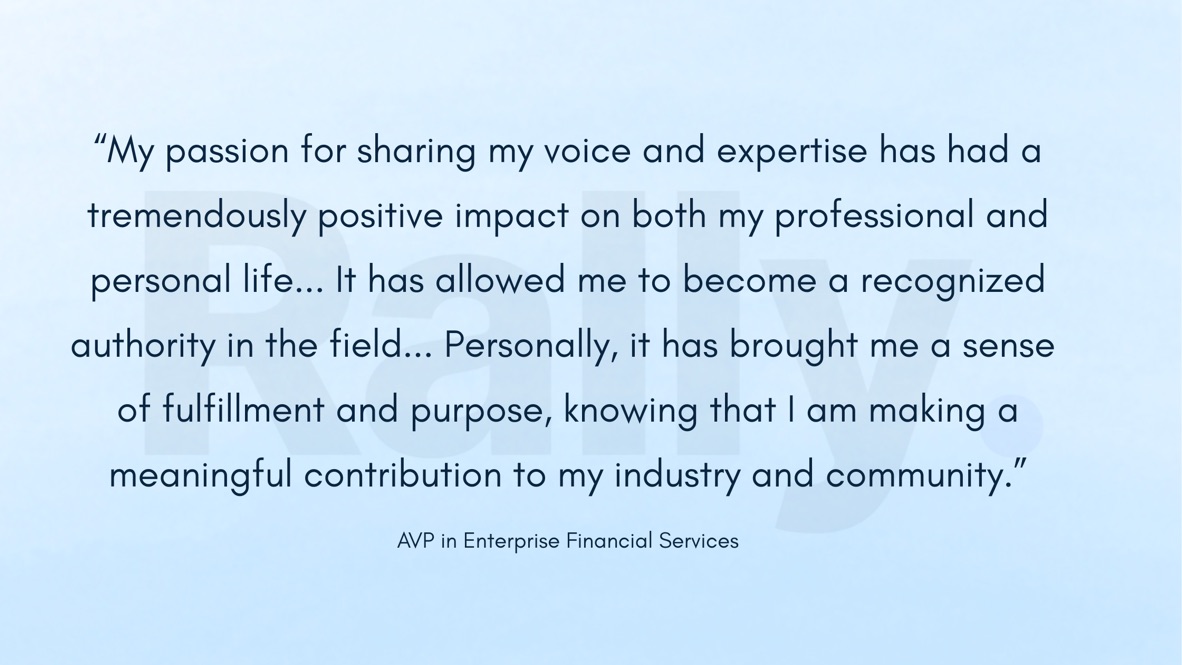
That shift also inspired us to launch a customer spotlight blog series centered entirely around the humans inside the program. Instead of only publishing overly polished corporate case studies, we highlighted real stories about career growth, leadership, innovation, and personal transformation.
Some customers talked about overcoming fears around public speaking. Others shared how participating in customer panels, stories, and community conversations expanded their internal visibility with executive leadership and helped strengthen their credibility across the organization.
One customer shared that participating gave them the confidence to speak more publicly about their expertise and ultimately opened doors professionally they never expected. Another explained that collaborating on customer content helped them demonstrate measurable ROI internally and secure broader support for strategic initiatives.
2. The advocacy became a byproduct, not the ask
The best customer advocacy programs are not built around extracting value from customers. They're built around creating value for customers. The advocacy naturally follows when people feel recognized, connected, and elevated by the experience.
The best customer advocacy programs are not built around extracting value from customers. They're built around creating value for customers. The advocacy naturally follows.
The Lesson That Still Holds
The name was never just branding. It was the foundation for the entire community identity.
If your advocacy program is struggling with participation, the name is worth revisiting. Not as a cosmetic fix, but as a diagnostic: what does it say about who the program is actually for?
Frequently asked questions
Why do most customer advocacy programs have low participation rates?
Most advocacy programs are named and framed around what customers do for the company rather than what the program does for customers. Generic names like "[Brand] Advocates" or "Customer Champions" signal a transactional relationship before a customer even joins. Low participation is usually a symptom of a program designed around extraction rather than value creation.
What makes a good customer advocacy program name?
A good advocacy program name passes four tests: a customer would say it out loud in a professional setting, it sounds credible in a LinkedIn bio or event listing, it connects to how customers see themselves in their industry, and senior practitioners would want to belong to something with that name. Names that describe what customers do for the vendor fail these tests. Names that describe who customers become by participating tend to pass them.
How do you build a customer advocacy program that customers actually want to join?
Start with listening, not designing. Talk to customers, CS, Sales, and community members about how customers see themselves professionally and how they want to be seen. Build the program identity around language customers already use to describe themselves at their best. The program should feel like professional recognition, not a vendor relationship tier. When the identity is right, customers recruit each other without being asked.
What kind of content works best for a customer advocacy program?
Content centered on the humans in the program consistently outperforms polished corporate case studies. Stories about career growth, leadership, overcoming professional challenges, and expanded visibility resonate because they're about people, not products. Customer spotlight features that highlight personal transformation generate more organic engagement and attract more program applicants than outcome-focused case studies alone.
How do you get customers to advocate without directly asking them?
Build a program that does something real for customers first: professional visibility, peer connections, thought leadership positioning, internal credibility. When customers feel genuinely recognized and elevated by the program experience, advocacy becomes a natural byproduct. They share content, take calls, and speak at events because the program has created real value for them — not because someone sent an ask email.

Nina Stephens is co-founder of Rally, a B2B SaaS customer marketing consultancy. Rally builds reference programs, lifecycle, advocacy, community, and CABs as connected systems tied to the metrics that matter to revenue leadership.