What this post covers
- How we rebuilt a once-a-year trophies event into a year-round advocacy system
- Why we built award categories with Sales, CS, and Leadership instead of inventing them internally
- How the Hero of the Year category outperformed every other category for advocacy activation
- The content engine that award winners fed: case studies, videos, webinars, and sales proof
- How locked-down enterprise accounts used the award as their first step into public advocacy
It's our favorite Throwback Thursday topic — and no, it's not conference season. It's the story of how we rebuilt our customer awards program from a once-a-year event activation into an always-on advocacy engine.
At first, our awards program looked like every other B2B awards program: tied to the annual event, focused on trophies, then forgotten until next year.
But we realized the best customer programs don't live for one night on stage. They create momentum year-round.
So we rebranded the program, detached it from the annual conference, and rebuilt it around customer recognition, storytelling, and advocacy.
And honestly? That's where the market is heading.
We Built the Categories Around Customers
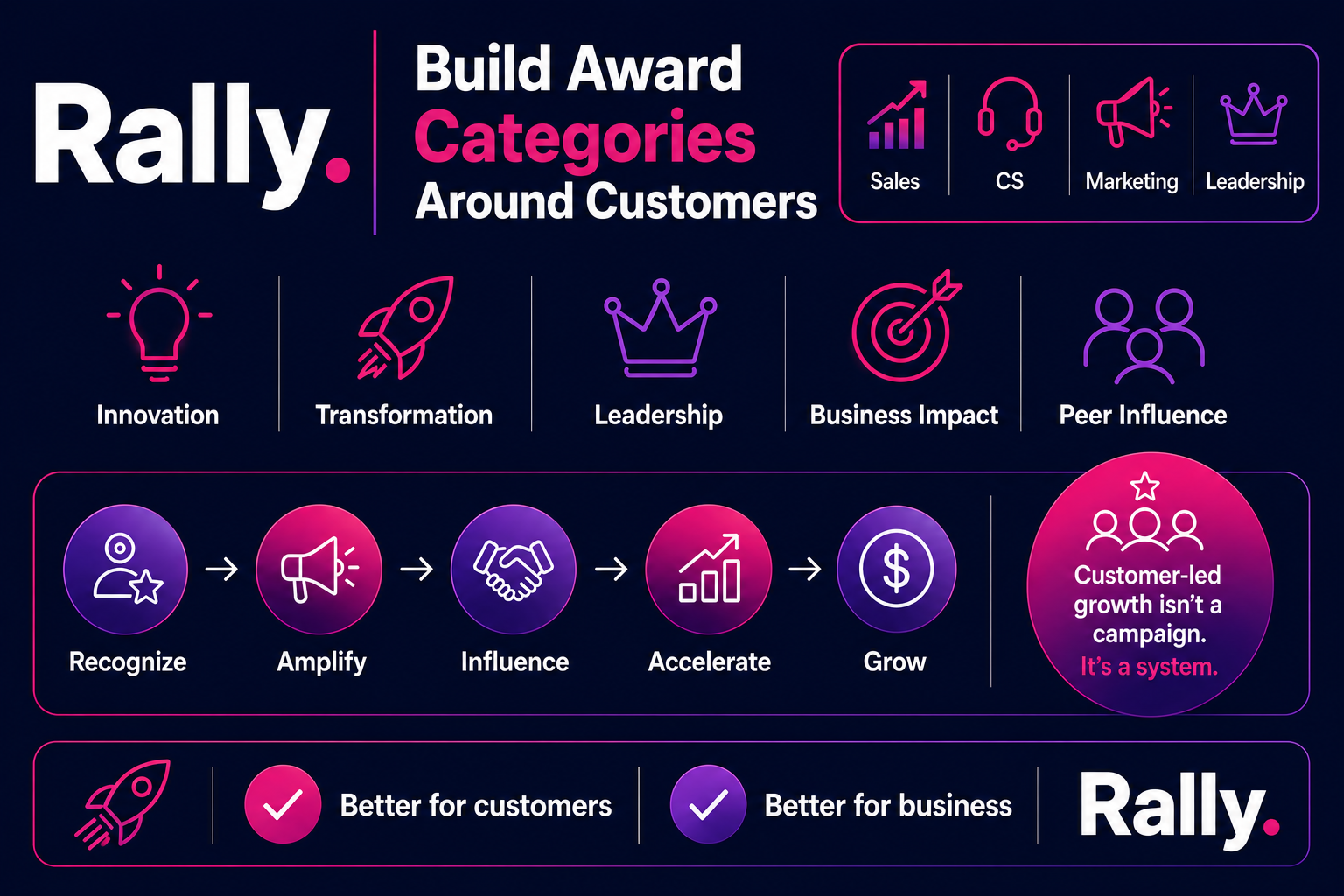
Instead of inventing random award categories internally, we worked with department heads across Sales, CS, Marketing, and Leadership to figure out what customers actually cared about.
Not "best product usage." Real things:
- Innovation
- Transformation
- Leadership
- Business impact
- Peer influence
We also intentionally targeted the logos and customer stories we knew would resonate most with prospects and future pipeline. At the same time, we opened self-nominations to everyone — because some of the best advocates are the ones you didn't expect to find.
Hero of the Year Became the Breakout Category
One category consistently stood out: Hero of the Year.
Why? Because it recognized the person, not just the company.
The customers who:
- Spoke publicly
- Shared expertise
- Helped peers
- Pushed innovation internally
- Became trusted voices in the industry
That emotional shift mattered. The best advocacy programs understand that people advocate for their own career growth before they advocate for a brand. Hero of the Year tapped into that directly.
Some winners even used the recognition internally for promotions and executive visibility. That's when you know the program is working.
The Biggest Surprise? Locked-Down Customers
Some of our best enterprise accounts couldn't do public case studies or logos because of PR and legal restrictions. Most programs stop there. We didn't.
Instead of asking what they couldn't do, we asked what they could do.
Sometimes the awards program became the first safe step into advocacy. An award turned into:
- A webinar
- A panel
- A customer story
- Eventually a full case study
Advocacy is a spectrum, not a binary.
We Turned Awards Into a Content Engine
The trophy was never the output. It was the input to something larger.
Once a customer accepted an award, the relationship shifted. They were no longer just a satisfied customer. They were a recognized expert. That shift made almost every subsequent ask easier.
The awards weren't the finish line. They became fuel for:
- Case studies
- Executive videos
- Webinars
- Social content
- Sales proof
- Customer spotlights
We even partnered with a key executive to record congratulatory videos for winners, which customers loved sharing internally and externally. That recognition loop created trust, visibility, and momentum far beyond the event itself.
Customer awards should not be treated like an event tactic. They should be treated like a scalable trust and advocacy system.
Want to go deeper on the program design side? See Maria's post on how to design a customer awards program that turns winners into advocates.
Frequently asked questions
How do you turn a customer awards program into an ongoing advocacy engine?
Detach the program from the annual conference calendar and rebuild it around customer recognition, storytelling, and content output. Design categories that reflect real business outcomes rather than invented award tiers. Create a plan for what you'll ask of winners in the 90 days after the event. The award is not the output — it's the input to a series of asks that become progressively easier.
What award categories work best for B2B customer advocacy programs?
Categories grounded in business outcomes outperform prestige-style categories. Innovation, transformation, business impact, leadership, and peer influence each map to a natural internal audience (Sales, CS, Marketing) that cares about the result and a natural external audience that finds it credible. A "Hero of the Year" or person-focused category consistently drives the highest advocacy activation because it recognizes the individual, not just the company.
Should a customer awards program use self-nominations or internal nominations?
Both. CSM-sourced nominations produce stronger stories because CSMs can identify compelling outcomes and gather specifics. But open self-nominations surface advocates you wouldn't find otherwise — customers who have already decided they want to tell their story publicly. Running both tracks in parallel gives you depth from the CSM channel and reach from the self-nomination channel.
How do you get content from award winners after the event?
Start with the lowest-friction ask: a short congratulatory video or a quote for the award announcement. Once a winner has said yes to something small, each subsequent ask is easier. The progression that worked for us: video or quote, then a spotlight feature, then a webinar, then a case study. Don't jump to the case study. Build toward it.
Can a customer awards program work for enterprise accounts with PR and legal restrictions?
Yes, and it's one of the most effective tools for unlocking them. Recognizing a customer's outcomes is an easier approval than producing content about a vendor. Awards give legal a narrow, controlled scope. Several of our best locked-down accounts accepted an award when they had declined case studies for years. The award creates the relationship context; the content follows once trust is established.

Nina has spent her career building customer marketing programs that turn satisfied customers into active advocates. At Rally, she helps B2B companies design scalable proof, community, and advocacy systems that drive real pipeline impact.